How Voice AI Helped Me Reset My Nervous System & Beat Burnout
How Voice AI Helped Me Reset My Nervous System
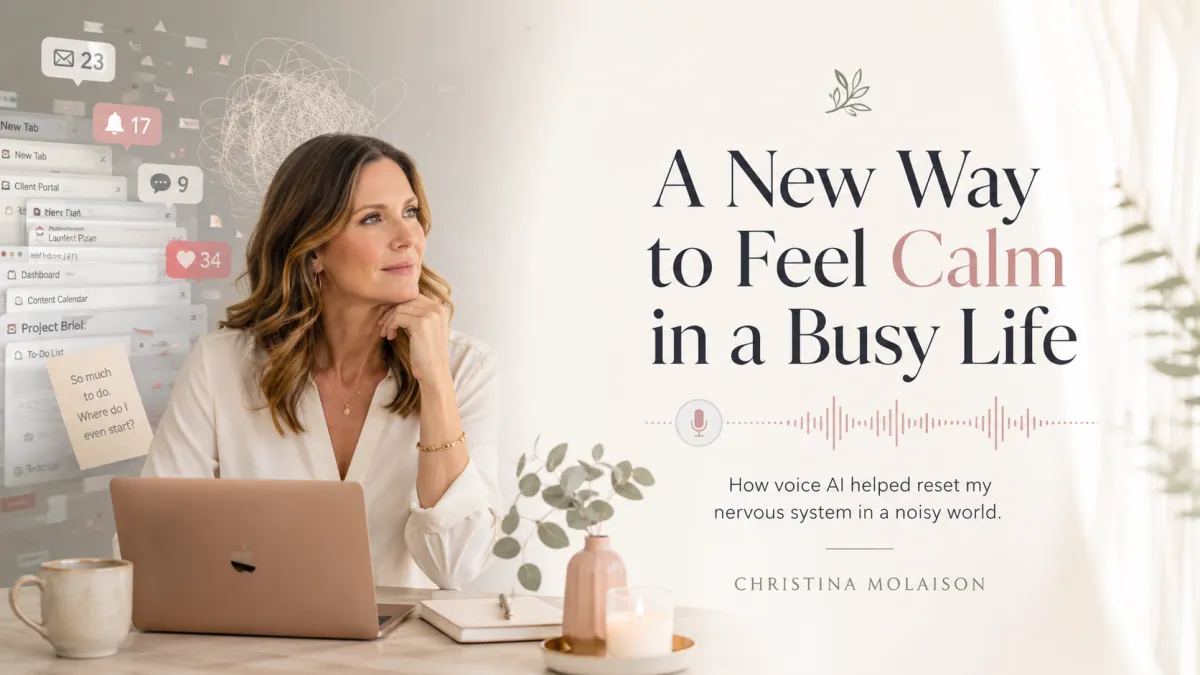
Do you ever feel like your mind is a browser with too many tabs open? The constant ping of notifications, the endless scroll of information, and the pressure to always be available can leave you feeling perpetually on edge. It is a hum of low-grade anxiety that has become the background music to modern life.
For business owners, this feeling is often magnified. We are told to hustle, to grind, to be constantly connected. The pressure to perform can lead to a state of chronic mental clutter, where true rest feels like a distant memory. This digital noise does more than just distract us; it slowly chips away at our ability to think clearly and feel calm.
I discovered an unexpected solution for this, and this is the story of how voice AI helped me reset my nervous system in a world where constant notifications and distractions are at an all time high. It was not about adding another productivity hack. It was about creating a system for intentional disengagement.
The Breaking Point in a World of Constant Noise
Before I built the systems that run my business today, I was trapped in the very cycle I now help my clients escape. The combination of hustle culture and burnout was my daily reality. I believed that more hours equaled more success, a dangerous myth that almost cost me my well-being.
I have been there. I remember working late into the night, sometimes until 3 AM, just trying to keep my business afloat. My body and mind were tired, and my kids started to notice how much I worked. It felt like I was doing too much for too little, and that feeling of burnout is something I never want to experience again. My mind was a constant storm of to-do lists, client worries, and the next big idea. Picking up my phone to check one email would lead to an hour of mindless scrolling, leaving me more depleted than before.
This is the insidious nature of the belief that hustle culture is toxic. It convinces you that exhaustion is a badge of honor. I was physically present with my family, but my mind was always elsewhere, tethered to my screen. The breaking point came when I realized I could not remember the last time I felt truly quiet inside. I was an operator in my own life, reacting to every notification instead of being a strategic architect of my time and energy.
Can Voice AI Actually Improve Your Mental Clarity?
My journey with systems started with professional frameworks, but it soon bled into my personal life. I was exploring different AI Tools for Productivity and Automation, thinking they would help me get more done in less time. I saw them as instruments for output, a way to optimize my work. I was skeptical of their role in anything beyond that.
The shift happened on a particularly overwhelming afternoon. My head was buzzing. I had a brilliant idea for a client, but the thought of opening my laptop, finding the right app, and typing it out felt like a monumental task. The friction was too high. On an impulse, I picked up my phone and, without looking at the screen, used the voice assistant. “Take a note,” I said, and then I just spoke. I dictated the entire idea, the nuances, the action steps.
When I was done, I put the phone back down. Nothing buzzed. No notifications popped up. There was no social media feed to get lost in. It was just my thought, captured, without the digital static that usually came with it. That was the moment of discovery. I realized I had been using technology to add to the noise when I could be using it to create silence. This was not about productivity. This was about preservation.
How to Use Voice AI to Reset Your Nervous System
I began experimenting, using voice commands as a buffer between me and the screen. This small change created a significant impact on my mental state. It became a personal system for managing cognitive load. The story of how voice AI helped me reset my nervous system in a world where constant notifications and distractions are at an all time high is about creating space. It is about using technology to serve your well-being, not just your workload.
Voice AI helps reset your nervous system by creating a buffer between you and your screen. By using voice commands to dictate thoughts, manage tasks, or play calming audio, you reduce visual stimuli and context-switching. This intentional disengagement from notifications and digital clutter helps lower cognitive load and create mental space.
Here are a few practical ways you can use this concept to move from a grind culture to a more sustainable growth mindset:
The Brain Dump: When your mind feels full, simply say, “Take a note,” and speak whatever is on your mind. Dictate your worries, your to-do list, or your creative ideas. Getting them out of your head and into a digital file without opening a single app is incredibly freeing.
Screen-Free Timers: Instead of picking up your phone to set a timer for a focus session (and getting distracted), use a voice command. “Set a timer for 25 minutes.” This keeps you in your workflow and away from the temptation of checking notifications.
Instant Ambiance: You can instantly change your environment without touching a device. A simple command like, “Play calm instrumental music,” or “Play the sound of rain,” can help shift your mental state and lower your stress levels in seconds.
Mindful Inquiries: Use voice AI to ask yourself questions without the pressure of a screen. For example, “Set a reminder for 3 PM that says, ‘What is one thing I am grateful for right now?’” It is a gentle, non-intrusive way to build mindfulness into your day.
Frequently Asked Questions
How to reset when mentally exhausted?
To reset when mentally exhausted, focus on activities that reduce sensory input. Step away from screens, take a short walk in nature, or practice deep breathing for a few minutes. Another effective method is a “brain dump,” where you write down everything on your mind to clear your head. The goal is to give your brain a break from processing new information and allow it to recover.
What does mental exhaustion feel like?
Mental exhaustion often feels like a persistent brain fog. You might feel cynical, detached from your work, and emotionally numb. It can be difficult to concentrate, make decisions, or feel motivated. Physical symptoms can also appear, such as headaches, fatigue, and trouble sleeping. It is a state of being emotionally and cognitively drained from prolonged stress.
How can I avoid burnout from hustling?
You can avoid burnout by building intentional systems for rest and recovery. This includes setting firm boundaries around your work hours, scheduling non-negotiable breaks throughout your day, and prioritizing sleep. It is also crucial to delegate tasks and automate processes where possible. The key is to work smarter by creating sustainable frameworks, not just working harder.
Can you succeed without hustle culture?
Absolutely. True success is sustainable, and hustle culture is not. Success without the grind comes from clarity, not chaos. It is about focusing on high-impact activities and building efficient systems that work for you. By replacing the “always on” mentality with an intentional, strategic approach, you can achieve your goals without sacrificing your health and well-being. This is the core of the anti hustle culture movement.
From Chaos to Calm: Your Turn to Build a Better System
Technology does not have to be the source of our stress. When used with intention, it can become a powerful system for protecting our peace. My journey from overwhelm to clarity taught me that the most important systems are not the ones that just manage our work, but the ones that manage our energy.
Using voice AI as a buffer is just one example of a small, intentional framework that can give you back a sense of control. It proves the core belief I share with every business owner I work with: smart systems do not restrict you, they free you. They create the space necessary for creativity, strategic thinking, and a calmer life.
You do not need to make a massive change to start feeling better. You just need to find one small point of friction and build a simple system to smooth it out. Your journey from chaos to clarity starts with one small, intentional change. What will yours be?